Dr Katy Soar, a Senior Lecturer in Classical Archaeology at the University of Winchester, is exploring the intriguing absence of prehistoric ghost stories in British folklore, despite the country’s rich tradition of ghost belief. Her research delves into why the spectres that commonly haunt the landscape tend to be more recent figures rather than ancient ones.
Exploring the lack of prehistoric ghosts
British ghost stories often feature well-known figures such as headless horsemen and historical characters like Anne Boleyn, but they rarely include spirits from prehistoric times. Dr Soar references Sir Charles Oman’s 1946 observation about the absence of woad-painted Britons among reported apparitions, suggesting that while prehistoric sites may be considered haunted, the associated ghosts are typically from later periods.
For instance, the Wandlebury Iron Age hillfort is home to a spectral knight from medieval tradition, while Bronze Age barrows in Cornwall are said to be haunted by a headless horseman, neither of which is definitively prehistoric. However, some exceptions exist, such as a white-robed figure seen at West Kennet Long Barrow during the summer solstice and a Bronze Age horseman reported in 1927.
Theories behind ghostly absence
Several theories attempt to explain the scarcity of prehistoric ghosts. The ‘stone tape’ theory, posited by archaeologist T. C. Lethbridge, suggests that intense experiences can leave an imprint on locations, but since the physical remains of prehistoric people are largely absent, there may be no ‘recorder’ for these memories. Additionally, it is proposed that ghosts might simply fade away over time, or that the unfinished business or warnings they represent have lost relevance.
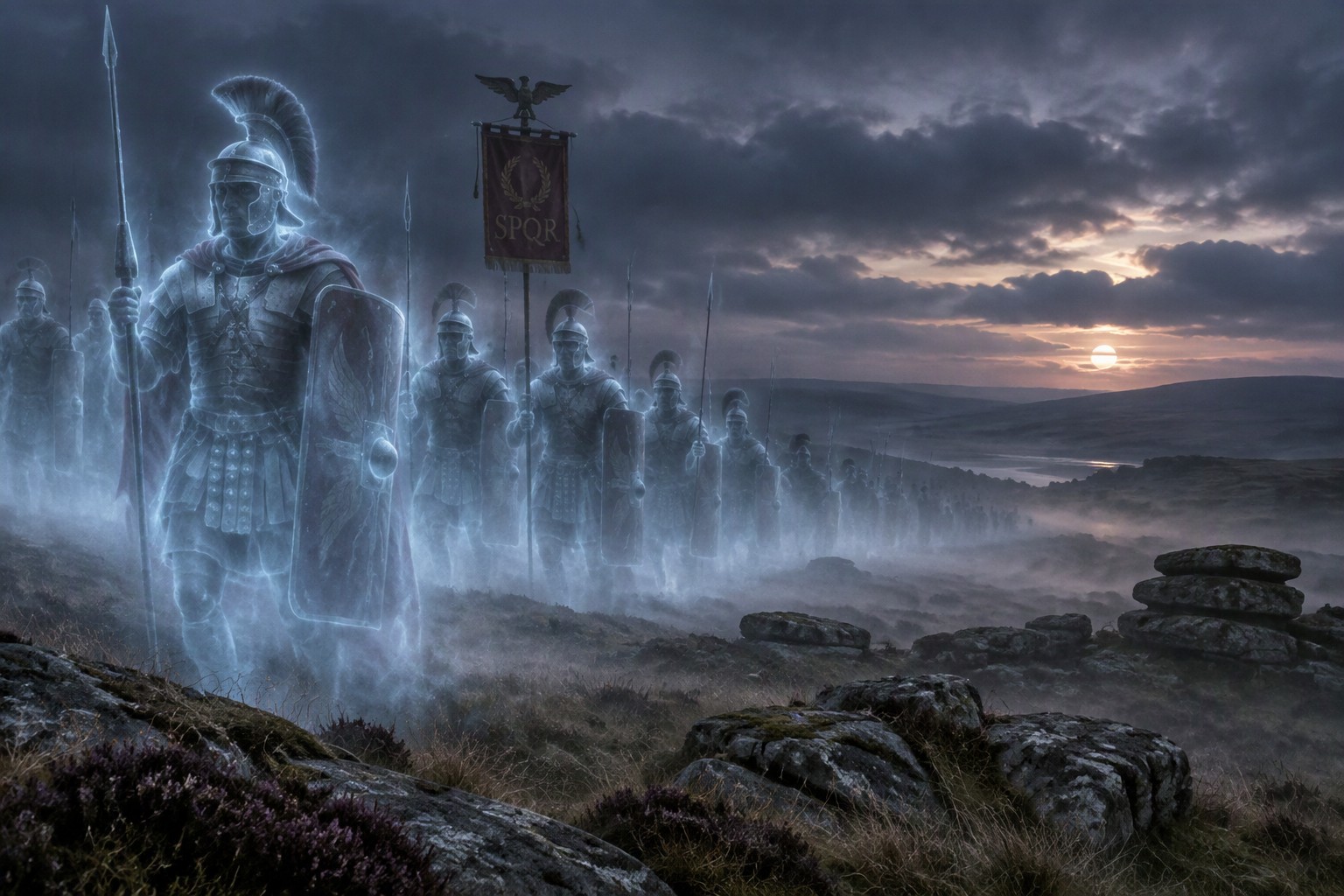
Another perspective considers ghosts as a reflection of contemporary folklore, revealing societal values and expectations rather than solely representing the deceased. For example, Roman ghosts have become more prevalent in folklore since the twentieth century, aligning with increased familiarity with Roman history through education and culture. This phenomenon suggests that communal traditions shape our understanding of what ghosts should represent.
Researching prehistoric ghost stories
To address the lack of prehistoric ghost sightings, Dr Soar and Professor Kenny Brophy from the University of Glasgow are conducting research into reported sightings of pre-Roman ghosts in the UK. They aim to compile a data set of ghost hauntings and invite the public to share any stories of prehistoric ghost encounters or experiences at ancient sites.
Dr Soar speculates that if prehistoric figures gained more visibility in popular culture, it might lead to an increase in reported sightings. The research seeks to understand how perceptions of ancient peoples influence the narratives surrounding ghosts and the potential for prehistoric spirits to emerge in contemporary folklore.
A more detailed discussion of this topic can be found in the British Fantasy Society Journal #29 for Winter 2026.
Source: University of Winchester