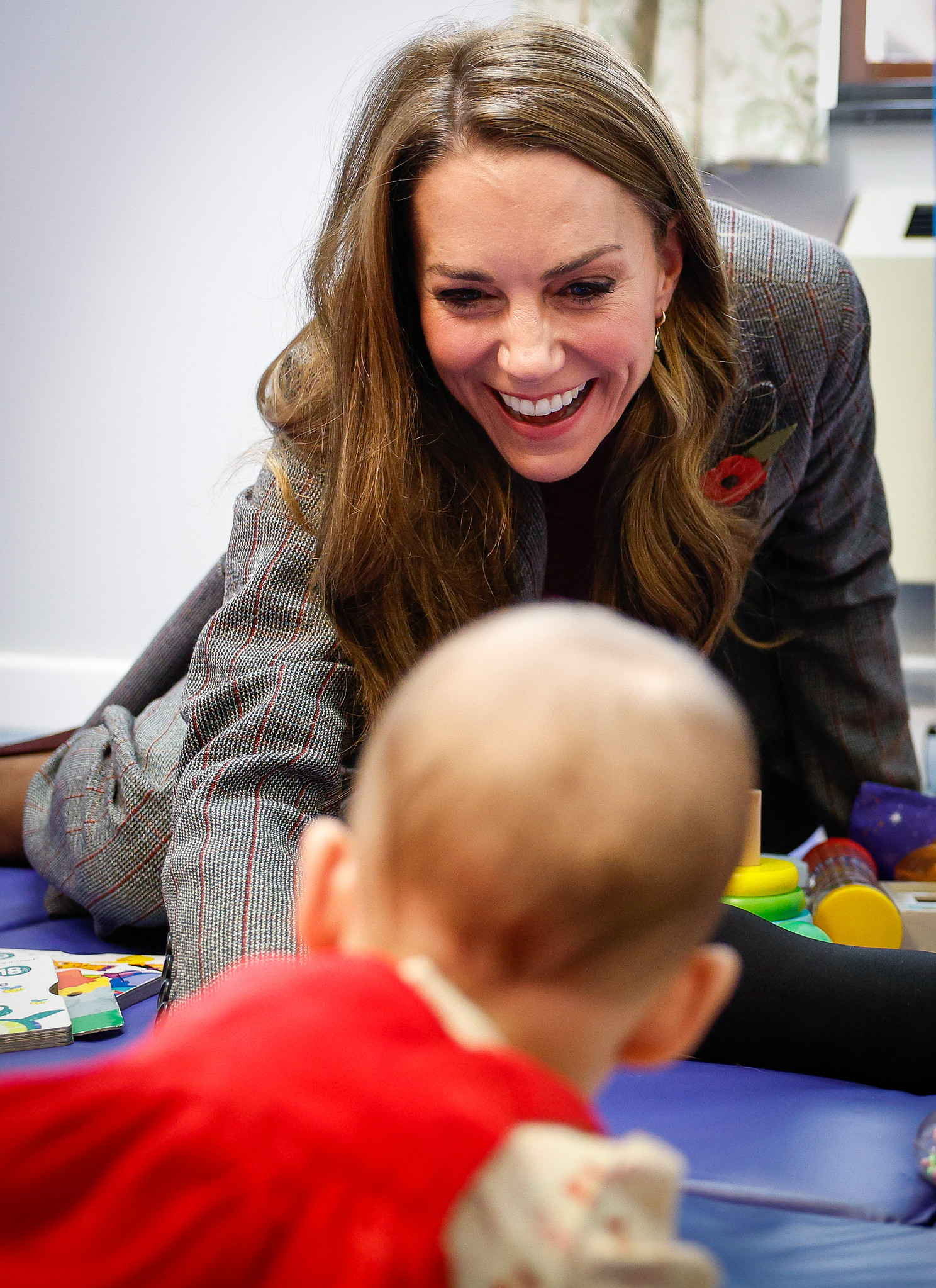
The Princess of Wales visited Chase Community Hospital in Bordon today to engage with health visiting teams and families involved in a new initiative aimed at identifying babies who may require additional support for their social and emotional development.
Understanding the Alarm Distress Baby Scale
During her visit, Her Royal Highness was introduced to the Alarm Distress Baby Scale (ADBB), an observational tool employed by health professionals for infants from birth to two years. This tool assists health visitors in detecting signs of social withdrawal by monitoring factors such as a baby’s eye contact, facial expressions, and activity levels during routine check-ups. This approach aims to pinpoint areas where a baby or family could benefit from extra assistance.
Health visiting teams from the Hampshire and Isle of Wight Healthcare NHS Foundation Trust participated in the second phase of a UK pilot of this approach, which is spearheaded by the Institute of Health Visiting and backed by The Royal Foundation Centre for Early Childhood. One of the participating teams is situated at Chase Community Hospital.
Expanding support for health visitors
Following the pilot, the Trust has trained additional specialist health visitors in the use of ADBB and plans to extend training to its remaining 13 health visiting teams across Hampshire. During her visit, The Princess met with health visitors and families who have utilised the approach, and she observed a baby health and development review.
Suzanne Rankin, Chief Executive of Hampshire and Isle of Wight Healthcare NHS Foundation Trust, expressed delight at welcoming The Princess and highlighted the significance of the work being done by health visiting teams with babies and families.
Background and funding for ADBB initiative
The Princess first encountered the ADBB during a visit to Denmark in 2022. Following this, The Royal Foundation Centre for Early Childhood collaborated with the Institute of Health Visiting to investigate how to implement the approach in the UK. After two pilot phases across ten NHS sites, the Centre announced a funding allocation of £250,000 over three years to aid in the further development and expansion of the initiative, including the provision of training and guidance for health professionals.
Source: Hampshire and Isle of Wight Healthcare NHS Foundation Trust